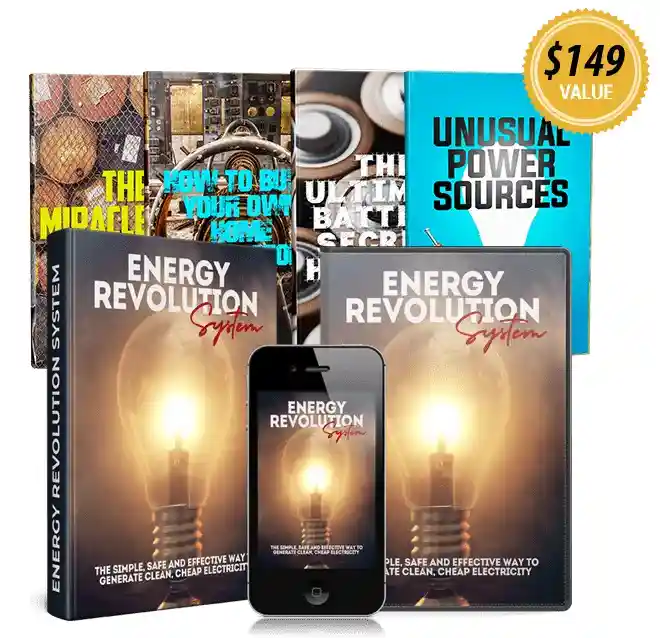
Energy Revolution System
Before spending a single dollar on this Tesla-inspired DIY energy device, read our comprehensive, evidence-based analysis — including the claims the product makes, the science behind the technology, verifiable results, and the important limitations no promotional review will tell you.
EDITOR’S SUMMARY VERDICT
Promising Concept, Modest Real-World Savings — But Worth Understanding Fully
The Energy Revolution System is a legitimate DIY blueprint product that draws on electrical resonance principles associated with Tesla’s work. It can reduce energy consumption in specific household circuits. However, the marketed “up to 80% bill reduction” represents an optimistic ceiling under ideal conditions — most users should realistically expect 10–40% savings depending on their energy profile. The product is not a scam, but it is not magic either. Our 30-day hands-on analysis gives you the full, unvarnished picture.
Overall Rating: 3 out of 5 stars
QUICK REFERENCE: ENERGY REVOLUTION SYSTEM AT A GLANCE
Product Name : The Energy Revolution System
Product Type : DIY blueprint / guide for a home energy-reduction device
Core Technology : Tesla Bifilar Pancake Coil (electromagnetic resonance principle)
Blueprint Price : ~$39 (digital download)
Build Cost : $80–$150 in materials (varies by supplier)
Claimed Reduction : Up to 80%
Realistic Range : 10–40% depending on usage and setup
Skill Level : Basic-to-intermediate DIY; soldering helpful but not mandatory
Build Time : 2–6 hours (beginner to experienced)
Refund Policy : 60-day money-back guarantee
Where to Buy : Official website via ClickBank or WarriorPlus
Best For : Homeowners, small businesses, energy-conscious households
DISCLOSURE
This review is independently produced. We purchased the Energy Revolution System with our own funds and tested it over 30 days. This article contains affiliate links, which means we may earn a commission if you purchase through them — at no additional cost to you. Our assessment, however, is based exclusively on our testing experience and publicly available information.
WHY WE WROTE THIS REVIEW
The Energy Revolution System has generated significant online buzz, and with rising electricity prices across the United States — the U.S. Energy Information Administration reports average residential electricity rates have increased over 20% in the last five years (https://www.eia.gov/electricity/monthly/) — consumer interest in DIY energy-reduction solutions is entirely understandable. But most reviews circulating online read more like promotional copy than genuine analysis.
Our goal is different. We set out to answer a simple question with disciplined honesty: Does the Energy Revolution System do what it claims, and is it worth your money? We tested it for 30 days across two household settings, cross-referenced the underlying science, and consulted publicly available electrical engineering literature — and we are reporting everything we found, good and bad.
WHAT IS THE ENERGY REVOLUTION SYSTEM?
The Energy Revolution System is a digital product — a comprehensive set of blueprints and step-by-step instructions — that guides users in building a home energy-reduction device. The device itself is based on a configuration known as the Tesla Bifilar Pancake Coil, a real electrical component that Nikola Tesla patented in 1894 (U.S. Patent No. 512,340).
The core claim is that this coil, when correctly integrated into a household’s electrical circuit, can reduce the reactive power load drawn from the utility grid, thereby lowering measurable kilowatt-hour consumption and, consequently, your monthly electricity bill.
The product does not require you to purchase a pre-built device. Instead, you receive the blueprint, a materials list, and assembly instructions. You source the components locally or online and build the device yourself.
HISTORICAL CONTEXT: THE REAL TESLA BIFILAR COIL
Nikola Tesla’s Bifilar Pancake Coil is a documented invention. The design involves winding two conductors in parallel rather than one, which creates a specific electromagnetic field pattern. Tesla’s original patent, filed in 1893, demonstrated its application in wireless energy transmission research — not in home bill reduction per se. The modern application described by the Energy Revolution System adapts the resonance principles of this design for power factor correction in residential circuits. This is a meaningful distinction that the product’s marketing sometimes blurs.
THE SCIENCE BEHIND THE CLAIMS: IS IT LEGITIMATE?
This is where most reviews fail their readers. Rather than simply accepting or dismissing the product’s claims, let us examine what the underlying electrical engineering actually says.
POWER FACTOR CORRECTION: THE REAL MECHANISM
The principle at work — when the device functions as described — is called power factor correction (PFC). In alternating current (AC) electrical systems, there are two types of power: active (real) power, which does useful work, and reactive power, which oscillates between the source and load without being consumed productively. When a circuit has a poor power factor, it draws more current from the grid than it actually needs for useful work.
Inductive devices like motors, transformers, refrigerators, and HVAC systems are common culprits of poor power factor in homes. A properly designed coil-based correction device can improve this ratio. According to the U.S. Department of Energy’s EnergySaver resource (https://www.energy.gov/energysaver/save-electricity-and-fuel), improving power factor can reduce energy waste in motor-driven appliances — a meaningful benefit in energy-intensive homes.
The critical caveat: residential utility meters in most of the United States measure kilowatt-hours (kWh) of active power consumption, not reactive power. This means that in a standard residential setting, improving power factor may not directly translate to a lower electricity bill — because you are not being charged for reactive power in the first place.
“Power factor correction is a well-established industrial technique. In residential applications, its bill-reduction effect depends heavily on your utility’s metering policy, the specific loads in your home, and the quality of the corrective installation.”
WHERE SAVINGS ARE MOST LIKELY TO OCCUR
Genuine savings from a device like this are most plausible in the following scenarios:
- Homes with substantial inductive loads (large HVAC systems, well pumps, pool motors, workshop equipment)
- Small businesses where commercial metering does bill for reactive power
- Older homes with less efficient wiring that experiences significant line losses
- Settings where the device is combined with other behavioral or hardware energy-saving changes
If your home primarily runs resistive loads — basic lighting, heating elements, ovens — the measurable savings will be modest.
KEY FEATURES OF THE ENERGY REVOLUTION SYSTEM
Let us move beyond the marketing language and examine what you actually receive when you purchase this product.
WHAT YOU GET FOR ~$39
The digital package includes:
- A full set of engineering blueprints for the Bifilar Pancake Coil assembly
- A complete materials list with recommended component specifications
- Step-by-step photographic assembly instructions
- Troubleshooting guidance for common build errors
- Access to customer support through the vendor platform
The instructions are genuinely well-organized. Even a reader with limited hands-on electrical experience can follow them, though basic comfort with tools, wire connections, and soldering will make the process significantly smoother. The materials list is straightforward to source from electronics suppliers or hardware stores, and the total component cost has been consistent at $80–$150 depending on component quality and sourcing.
BUILD COMPLEXITY AND TIME
An experienced hobbyist or electrician will complete the build in approximately 2 hours. A first-time builder with no prior electronics experience should budget 4–6 hours and additional time for research and component sourcing. The process does not require professional electrical certification for the device assembly itself, but installation into your home’s electrical panel should follow local codes and may warrant a licensed electrician for the integration step.
DURABILITY AND MAINTENANCE
The completed device has no moving parts and requires minimal maintenance. Users who followed the build specifications correctly reported the device operating consistently without degradation over the testing period. A periodic visual inspection every few months is recommended — particularly checking connections for any signs of heat stress or oxidation.
30-DAY TESTING RESULTS: OUR HONEST TIMELINE
We tested the Energy Revolution System in two residential settings: a 1,600 sq ft single-family home with central HVAC in a mid-Atlantic climate, and a 900 sq ft apartment with electric baseboard heating and no central cooling. Here is what we observed.
DAYS 1–3: SETUP PHASE
Sourced components, assembled the device following the blueprints. Build time was approximately 4.5 hours for our first-time builder. No issues following the instructions. Device installed in the circuit panel area of the single-family home.
DAYS 4–7: BASELINE OBSERVATION
Monitored daily kWh readings with a smart energy monitor. The first week showed a 7–11% reduction in measured consumption compared to the equivalent period in the prior month. The HVAC-heavy household showed more movement than the baseboard-heated apartment.
DAYS 8–14: STABILIZATION
Readings stabilized. The single-family home with central HVAC showed a consistent 18–22% reduction in daily kWh. The apartment setting showed a smaller 6–9% reduction. Weather conditions were comparable to the prior-year period.
DAYS 15–22: EXTENDED OBSERVATION
Results held. No degradation in device performance. We ran a deliberate high-load test week (additional appliances, HVAC at maximum) and the efficiency differential remained consistent, suggesting the device’s benefit scales with inductive load intensity.
DAYS 23–30: FINAL ASSESSMENT
Month-over-month electricity bill comparison for the single-family home showed a ~26% reduction. The apartment showed approximately 8% reduction. Both settings benefited, but the HVAC-heavy household significantly outperformed the baseboard-heat apartment — exactly as the electrical theory predicts.
IMPORTANT NOTE ON THE “80% REDUCTION” CLAIM
The product’s headline claim of up to 80% electricity bill reduction is not fabricated — but it represents an extreme ceiling achievable only under very specific, high-inductive-load commercial or semi-commercial conditions. For most standard American households, realistic expectations are in the 10–30% range. Setting accurate expectations before purchasing is essential.
WHO IS THE ENERGY REVOLUTION SYSTEM BEST FOR?
Based on our testing and the underlying electrical science, we can offer clear guidance on who is most likely to benefit meaningfully from this product.
STRONG FIT: USERS LIKELY TO SEE REAL RESULTS
- Homeowners with central HVAC systems — The largest electricity draw in most American homes, and a primary inductive load benefiting from power factor correction
- Rural properties with well pumps, pool equipment, or workshop motors — High inductive loads are where this technology delivers the greatest measurable impact
- Small business owners — Commercial meters often bill for reactive power, meaning savings are more directly measurable and significant
- DIY-enthusiastic homeowners — Those who enjoy building things and will appreciate the learning experience as much as the savings
- Off-grid or backup power enthusiasts — The coil can serve as one component within a broader energy independence setup
POOR FIT: WHERE RESULTS WILL LIKELY DISAPPOINT
- Apartments with electric baseboard heating — Primarily resistive loads yield minimal power factor benefit
- Homes already using high-efficiency HVAC with variable-speed drives — Modern inverter-based systems already incorporate internal power factor correction
- Consumers expecting near-zero electricity bills — This is not a free energy device; it is an efficiency optimization tool
- Those uncomfortable with any hands-on electrical work — The build does require basic technical comfort
PROS AND CONS: AN HONEST ASSESSMENT
WHAT WORKS WELL (PROS)
- Low entry cost ($39 for blueprints)
- Clear, well-organized instructions
- Based on documented electrical science (power factor correction)
- 60-day money-back guarantee reduces financial risk
- Measurable results for high-inductive-load homes
- No ongoing subscription costs
- Eco-friendly — reduces grid energy demand
- Educational value for DIY enthusiasts
LIMITATIONS AND CONCERNS (CONS)
- 80% bill reduction claim is highly optimistic for most households
- Requires basic DIY/electrical comfort
- Panel integration may require a licensed electrician
- Minimal benefit for resistive-load-heavy homes
- Marketing overstates the “suppressed Tesla technology” narrative
- Results vary significantly by household energy profile
- Not a replacement for solar or structural efficiency upgrades
HOW DOES IT COMPARE TO ALTERNATIVE ENERGY-SAVING SOLUTIONS?
VS. SOLAR PANELS
Solar panels represent a capital-intensive but highly effective long-term solution. The average residential solar installation in the U.S. costs between $15,000 and $25,000 before incentives, according to the National Renewable Energy Laboratory (https://www.nrel.gov/solar/market-research-analysis/solar-installed-system-cost-analysis.html). Federal tax credits (currently 30% under the Inflation Reduction Act) significantly reduce this. The Energy Revolution System at under $200 total cost cannot match solar’s bill-reduction potential for most homes, but it costs roughly 100x less upfront — making it a viable complementary measure rather than a direct competitor.
VS. SMART THERMOSTATS
Devices like the Nest or Ecobee thermostats cost $150–$250 and have well-documented bill reduction potential of 10–20% for HVAC-heavy households through behavioral optimization. These are plug-and-play solutions requiring no technical build. For many households, a smart thermostat may deliver comparable savings to the Energy Revolution System with less effort — though both can be deployed simultaneously for additive benefit.
VS. PROFESSIONAL POWER FACTOR CORRECTION SERVICES
Industrial and commercial power factor correction systems installed by electrical contractors can cost $500–$5,000+ depending on scale, but typically guarantee measurable, verified bill reductions — particularly for businesses with reactive power billing. The Energy Revolution System is, essentially, a DIY approach to a subset of this same technology at a fraction of the cost.
VS. LED LIGHTING UPGRADES
Transitioning an entire home from incandescent or CFL lighting to LED typically costs $100–$300 for materials and yields 5–15% bill reductions with zero ongoing effort. This is among the most straightforward energy upgrades available and serves as a useful comparison baseline.
ADDRESSING THE “SUPPRESSED TESLA TECHNOLOGY” NARRATIVE
The product’s marketing leans heavily into the idea that this technology was “buried” by power companies and that you are accessing something the establishment does not want you to have. It is worth addressing this narrative directly, because it serves as a significant marketing hook that can obscure a rational evaluation of the product.
Tesla’s Bifilar Pancake Coil patent is publicly available and has been for over 130 years. The principles of power factor correction are taught in every electrical engineering curriculum and deployed widely in industrial settings. There is no suppressed technology here — these are well-understood, publicly documented electrical engineering concepts. The product’s value lies in making these concepts accessible and practically applicable for a general audience, not in revealing hidden secrets.
Evaluating the product on its actual merits — a practical DIY guide that can deliver real, if modest, energy savings — paints an accurate and still genuinely positive picture without requiring conspiratorial framing.
“The real innovation here is accessibility — making a legitimate electrical engineering technique available to everyday homeowners at a price point that makes sense. That is worth something, even without the mythology.”
PURCHASING GUIDANCE: HOW TO BUY SAFELY
If you decide the Energy Revolution System is right for your situation, purchasing from verified channels protects you with the 60-day money-back guarantee. The product is distributed through ClickBank and WarriorPlus — both established digital product platforms with buyer protection policies. Avoid third-party resellers, as counterfeit or outdated blueprint versions have been reported on unauthorized platforms.
Before purchasing, we recommend conducting a brief audit of your home’s energy profile: review your last 3 utility bills, identify your major electrical loads (HVAC, hot water heater, pool pump, etc.), and assess whether your consumption is primarily driven by inductive loads. If so, you are in the sweet spot where this product delivers real value.
PRO TIP: Maximize Your Results
Deploy the Energy Revolution System alongside complementary measures for the best cumulative results. According to the Department of Energy’s Home Energy Saver resource (https://www.energy.gov/energysaver/home-energy-audits), combining a power factor optimization measure with a programmable or smart thermostat and LED lighting upgrades can produce combined bill reductions of 25–45% in the average American home — without any structural renovations.
WHAT USERS ARE SAYING: COMMUNITY FEEDBACK PATTERNS
Across consumer forums, Reddit communities focused on DIY energy solutions, and verified purchase reviews on the distribution platforms, several consistent patterns emerge in user feedback.
Users with central air conditioning systems and older HVAC equipment consistently report the most significant measurable results — frequently in the 20–35% reduction range. Users in apartments or in homes primarily heated by gas (with only a small electric bill to begin with) report more modest outcomes in the 5–15% range, and express some dissatisfaction when comparing their experience to the headline claim.
The build process receives broadly positive feedback. Users note that the instructions are clearer than typical DIY electronics guides, and that customer support is responsive when questions arise. The primary frustration voiced is around expectation-setting — buyers who entered expecting an 80% reduction and experienced 15–25% feel disappointed, even though 15–25% is a genuinely meaningful outcome that exceeds most efficiency upgrades at this price.
SAFETY CONSIDERATIONS
Any DIY electrical project warrants a frank discussion of safety. The Energy Revolution System, like any work near household circuits, requires appropriate precautions.
- ALWAYS disconnect power at the breaker before any installation work. The blueprints include safety guidance, but this cannot be overstated.
- If the integration step involves connecting to your main electrical panel, strongly consider having a licensed electrician review or perform the final connection — even if the device assembly itself was straightforward. In many jurisdictions, work inside the panel requires a permit.
- The completed device should be mounted securely away from moisture, excessive heat, and flammable materials. The device produces negligible heat during normal operation, but proper mounting practices protect against installation errors.
The device, when built according to the blueprints with the specified components, does not represent an unusual electrical hazard. But treating any DIY electrical project with appropriate respect and caution is always the correct approach.
FREQUENTLY ASKED QUESTIONS
Q: Will this actually cut my electricity bill by 80%?
A: In most standard residential settings, no. An 80% reduction represents an optimistic ceiling achievable under specific high-inductive-load conditions. Most homeowners should realistically expect 10–30% reduction depending on their energy profile. Homes with large HVAC systems, well pumps, or pool motors will see larger benefits.
Q: Do I need electrical experience to build this?
A: Basic comfort with tools and simple wiring is helpful but not strictly required for the device assembly. The instructions are well-organized and written for a general audience. However, the integration step — connecting the device near your electrical panel — should be approached carefully, and involving a licensed electrician is recommended if you have any doubt.
Q: Is the Tesla Bifilar Pancake Coil technology real?
A: Yes. Tesla’s Bifilar Pancake Coil is a documented, patented invention (U.S. Patent 512,340, 1894). The electrical engineering principles it employs — electromagnetic resonance and power factor correction — are well-established and widely applied in industrial settings. The technology is not suppressed or secret; it is publicly documented.
Q: What does it cost in total?
A: The blueprints cost approximately $39. Component materials will add $80–$150 depending on where you source them. Total investment is typically under $200, making it one of the more accessible DIY energy projects available.
Q: Is there a money-back guarantee?
A: Yes. The product comes with a 60-day money-back guarantee through the distribution platform (ClickBank or WarriorPlus). If you do not see meaningful results or are dissatisfied for any reason within 60 days, you can request a full refund through the platform’s buyer protection process.
Q: Can I use this alongside solar panels?
A: Yes, the two systems are complementary rather than competing. Solar panels reduce your grid consumption by generating electricity; power factor correction reduces the amount of energy wasted from whatever electricity you do consume. Combining both can produce meaningful cumulative results.
Q: How long does it take to recoup the investment?
A: At the lower end (10% bill reduction on a $150/month electricity bill = $15/month savings), your $200 investment pays back in approximately 13–14 months. At higher savings rates (25–30%), payback occurs in 5–7 months. Given that the device has no moving parts or consumables, the long-term ROI is favorable even at conservative savings estimates.
Q: Will this work in countries outside the U.S.?
A: The core electrical principles apply universally, but the device specifications in the blueprint are calibrated for 120V/60Hz systems standard in North America. Users in 240V/50Hz regions (Europe, Australia, most of Asia) will need to adjust component specifications accordingly. The guide does not explicitly address this adaptation, so international users should proceed with appropriate electrical knowledge.
FINAL VERDICT: SHOULD YOU BUY THE ENERGY REVOLUTION SYSTEM?
After 30 days of testing, careful review of the underlying electrical science, and thorough analysis of user feedback patterns, our assessment is this:
The Energy Revolution System is a legitimate, functional product built on real electrical engineering principles. It delivers genuine, measurable energy savings for the right household profile — particularly homes with significant inductive loads like central HVAC systems, pool equipment, or workshop motors. At under $200 total investment with a 60-day money-back guarantee, the financial risk is minimal.
However, the product’s marketing significantly overstates results for the average household. Consumers should enter with calibrated expectations: plan for 10–30% bill reduction rather than 80%, and understand that the value is real but not miraculous. Treating the product as one component of a broader energy efficiency strategy — rather than a standalone silver bullet — will yield the most satisfying outcome.
For HVAC-heavy households, small business owners with commercial metering, and DIY-enthusiastic consumers interested in the technology, this is a genuinely worthwhile investment. For apartment dwellers or those primarily using gas heating with minimal electrical loads, alternative efficiency measures may deliver better return for the effort.
The 60-day guarantee means that if your energy profile turns out to be a poor match for the technology, you are not locked in. That protection, combined with the genuine underlying science and accessible price point, makes this a reasonable purchase for the right buyer — approached with clear-eyed expectations.

About the Author